Georgetown University · Walsh School of Foreign Service · Graduate Elective, Fall Semester
Democratic Leadership
MSFS Graduate Course · Fulfills the MSFS Leadership Requirement

Becoming a Democratic Leader

This highly practical course prepares you for the leadership positions you are aiming for — building your confidence, your awareness, and your ability to work with others. All in a democratic way, so you strengthen our democracy from the bottom up.

What students say about the class
When
Fall · Thursdays, 3:30–6:00 PM
Format
14 workshop-style sessions
Open To
All Georgetown graduate programs
Counts Toward
MSFS Leadership Req. + 2 certificates
Students in animated breakout discussions during a Becoming a Democratic Leader session at Georgetown
A breakout session in Becoming a Democratic Leader. Every class is a workshop — no passive lectures.
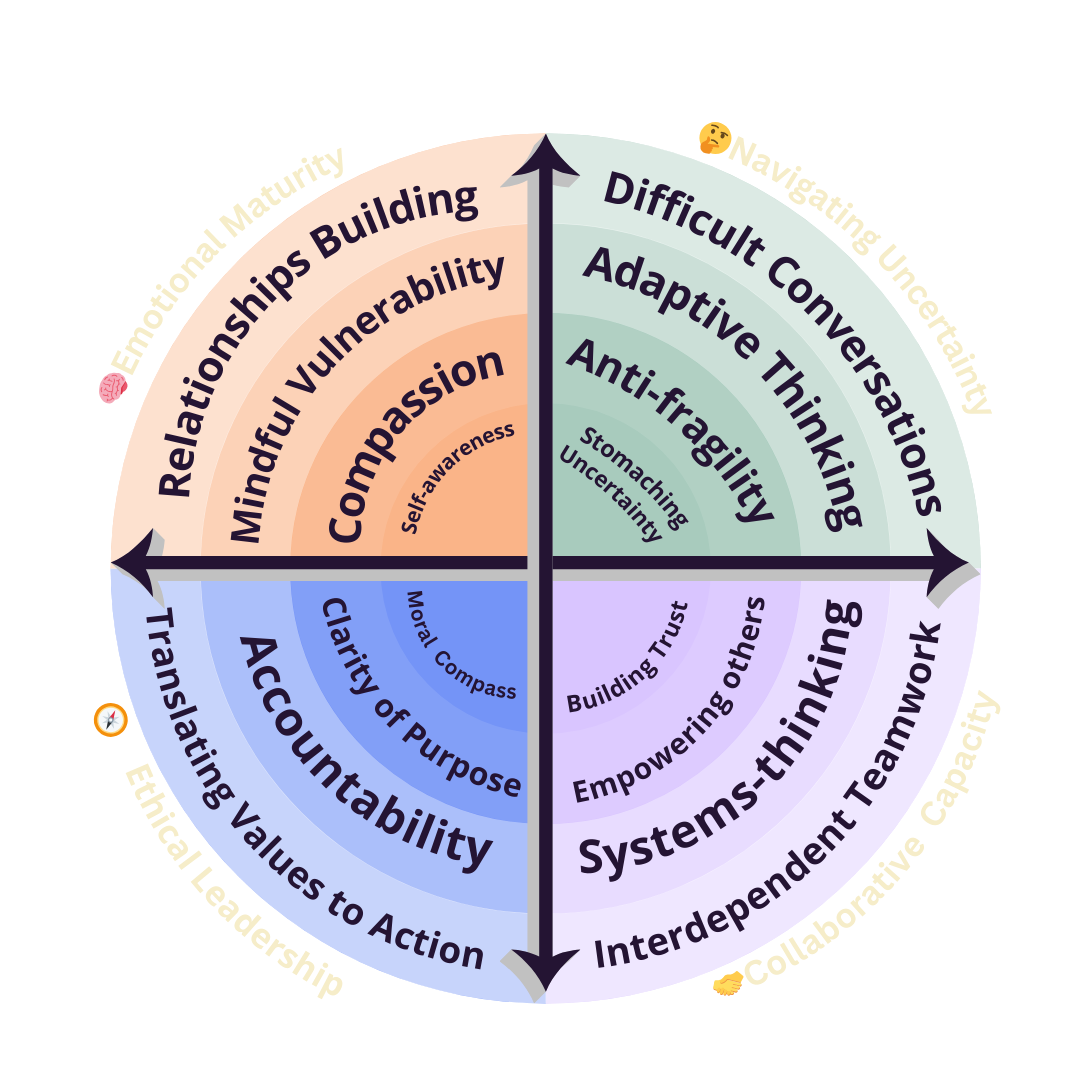
What You’ll Learn

Leadership you can use the same week you learn it.

You’ll become a more effective, authentic, and ethical leader — able to relate to power, build trust, tell stories that move people, lead teams, read the room, and face your fears so you can grow.

01

Power & Authority

Understand how power and authority actually work — and anchor your actions in purpose and values, so you can be both more ethical and more effective.

02

Leading Through Uncertainty

Adaptability is the defining trait of the modern leader. Learn to diagnose the situation, experiment, and adjust using Adaptive Leadership.

03

Trust & Influence

Influence isn’t granted with a title — it’s built. Master the craft of trust-building and relationships that expand what you can achieve.

04

Leading Teams Democratically

What does it take to lead a team without commanding it? Learn to facilitate well, run meetings that matter, and share leadership.

05

Reading the Room

See the group dynamics beneath the surface of any meeting — who holds power, what goes unsaid, and how systems shape behavior.

06

Storytelling as Leadership

Craft a public narrative that connects your story to your purpose — and moves people from agreement to action.

07

Identity & Purpose

Become intentional about who you are becoming as a leader — and learn to help others do the same.

08

Capstone Action Projects

Apply everything in a team project: analyze or organize a real event related to democracy, with real stakes and a real audience.

Grounded in proven frameworksAdaptive LeadershipCommunity OrganizingPublic NarrativeAdult DevelopmentImmunity to ChangeSystems Thinking
How the Course Works

You won’t just study leadership. You’ll practice it.

Every session is a hands-on workshop built around discussion, simulation, and real leadership challenges — individually and in teams. The focus is practicality and immediate application.

Action Learning

Each class is an experience, not a lecture. Dynamic exercises put every framework into practice on the spot.

Interactive by Design

You’re a teacher too. Student participation drives every session — you’ll get many chances to speak, act, and lead.

Simulations

Real events and imagined scenarios recreate the dilemmas and pressures leaders actually face — safely, in the room.

Real-World Assignments

Learning is exported beyond the classroom: you’ll test new leadership tools in your real life, right away.

Honest Discussion

We disagree, explore alternatives, and go deep — including in conversation with high-level guest leaders.

Action Teams

You’ll join a team of 4–5 students to explore your leadership challenges together and deliver a collective project.

Students in a roundtable discussion with guest speakers
A class roundtable with guest speakers — real discussions, not scripted Q&A.
A student-led public event organized as part of the course
A student-led event — capstone action teams take their work public.
The Curriculum

Fourteen weeks. One arc: from understanding power to exercising it.

01
What is democratic leadership?
Foundations and first principles
02
Adapting in the face of uncertainty
Adaptive Leadership
03
Creating democratic space
Teams & group dynamics
04
Empowering and developing new leaders
Coaching
05
What are you prepared to sacrifice?
An ethics simulation
06
Storytelling as a leadership practice
Articulating purpose
07
Who are you becoming?
Leadership identity & style
08
Overcoming the resistance to change
Immunity to Change
09
Building trust and influence
The foundations of effectiveness
10
Productive conflict and difficult conversations
Disagreeing well
11
Becoming a systems thinker
Systems Thinking
12
Personal, collective and systemic power
How power really works
13
How social change works
Social movements & community organizing
14
A lifelong leadership practice
Continuing your development
Guest Leaders

Learn from people who have actually led movements.

Past sessions have featured leaders like Leopoldo López, the Venezuelan pro-democracy leader — unscripted conversations about what leadership costs, and what it makes possible.

Students co-create the learning environment and are welcome to suggest guest speakers.

MSFS students in conversation with Leopoldo López via video link
An MSFS session in conversation with Leopoldo López.
Student Voices

“Best class I’ve ever taken, amazing professor, truly can’t recommend it enough. SO powerful — learnings will stay with me forever.”

★★★★★

“This was the most practical course I have ever taken in my academic career.”

MSFS Course Evaluation
★★★★★

“Overall one of the most dedicated and thoughtful professors I have ever had. Truly was invested in the success of students and the class.”

MSFS Course Evaluation
★★★★★

“He went deeper into leadership than I was expecting, and really helped each student reflect on who they are and what kind of leader they want to become. I wish the class had been longer.”

MSFS Course Evaluation
★★★★★

“It was above and beyond the level of care I have seen other professors express for their students at Georgetown.”

MSFS Course Evaluation
★★★★★

“The professor was incredibly engaging, experienced, and truly cared about making an impact on the students. Very manageable workload.”

MSFS Course Evaluation
★★★★★

“MSFS prides itself on being a program dedicated to service and leadership, and this course and professor went above and beyond to practice that.”

MSFS Course Evaluation

Quotes are taken from Georgetown MSFS’s official anonymous end-of-semester course evaluations.

Your Instructor

Taught by someone who has done it.

Portrait of Professor Nikola Ilic
Prof. Nikola Ilic — Georgetown MSFS

“Growing up in a war-torn society in Yugoslavia in the 90s drove me to become an activist at 15.”

Nikola Ilic is not a leadership theorist — he is a practitioner. At 15 he joined Otpor, the Serbian student movement that helped bring down a dictatorship. He has since co-founded four social movements and four companies, including Serbia on the Move, and serves on the board of Kreni-Promeni, Serbia’s largest grassroots organization. He is also a founding member of the World Liberty Congress — the largest global organization of pro-democracy activists from all over the world.

Since 2010 he has been a teaching partner of Harvard’s Marshall Ganz — the architect of the community organizing model behind some of the most successful campaigns of our time. He is the founder of ChangeLab, co-leads leadership development for Volt Europa, and at Georgetown also teaches Ethics in International Affairs.

He lives in Washington, DC with his wife and two daughters.

Master’s degree, Harvard University
Leadership coaching certificate, Georgetown University
Co-founder of 4 social movements and 4 companies
Founder, ChangeLab — a world-class leadership development company
Details & FAQ

The practical part.

Schedule
Fall semester, Thursdays 3:30–6:00 PM

One weekly session, workshop format, on campus.

Credit
Fulfills the MSFS Leadership Requirement

Also counts toward the Certificate in Diplomatic Studies and the MA in Democracy & Governance.

Workload
Meaningful, not overwhelming

Core readings kept focused; supplementary materials available if you want to go deeper.

Who can take this course?

The course is open to graduate students across Georgetown University — not just MSFS. If you’re in another program and unsure whether it fits your plan of study, email Prof. Ilic.

Do I need prior leadership experience?

No. The course meets you where you are. Whether you’ve led organizations or are just starting to see yourself as a leader, the work is personal, practical, and adapted to each student.

What is the workload like?

Medium and manageable — students consistently describe it as “not overwhelming but highly meaningful.” The goal is that every core reading and assignment earns its place, with optional materials for those who want more depth.

How is this different from other leadership courses?

You practice, rather than only study. Every session is an interactive workshop with simulations, real-world assignments, and team projects — built on frameworks like Adaptive Leadership, community organizing, and systems thinking, and adapted through the semester to the needs of the class.

Can students shape the course?

Yes. Students co-create the learning environment, and the course design adapts through the semester based on what the class needs. You’re welcome to suggest guest speakers.